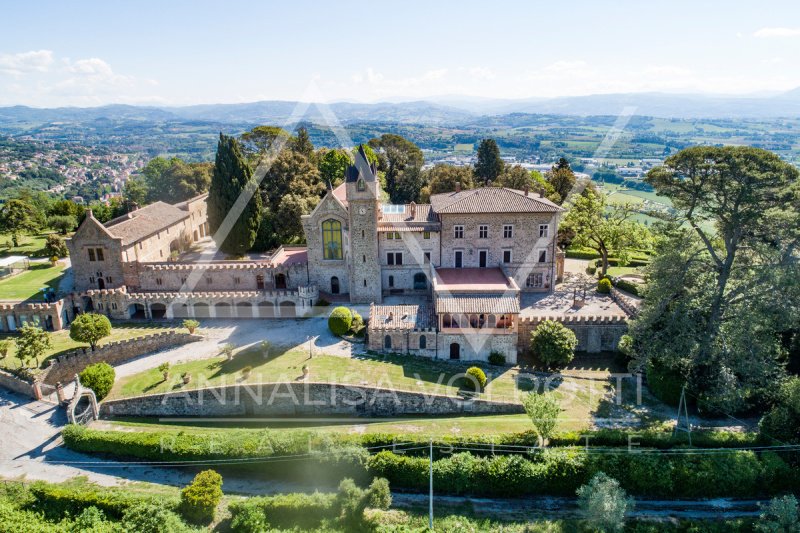
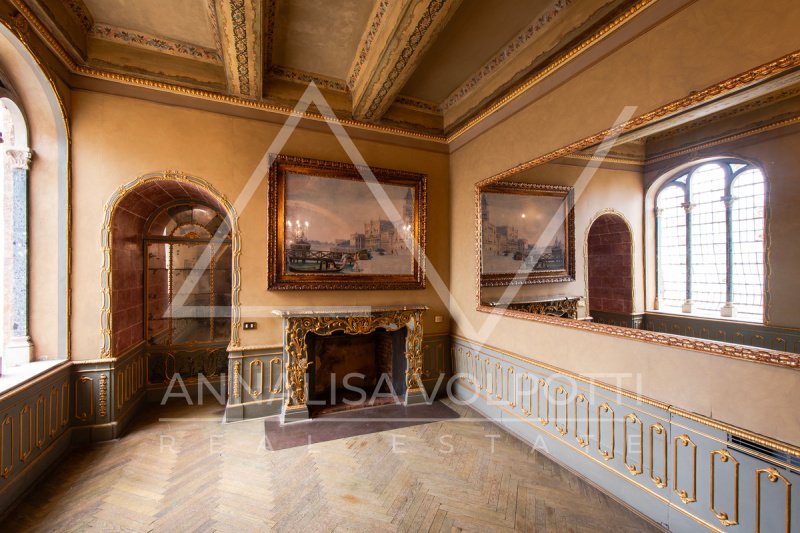
The Castello di Santa Petronilla is a fascinating example of Neo-Gothic architecture, blending history, art, and nature. Its history is closely linked to the figure of the painter Lemmo Rossi Scotti, an Umbrian artist who transformed the ancient 13th-century monastery into an elegant and charming residence, creating a unique atmosphere that embodies the romantic spirit of the era. The History of the Castle Located along the Via Eugubina in Perugia, the Castello di Santa Petronilla became famous thanks to the transformation that Lemmo Rossi Scotti brought to the structure. Born in 1848 in Perugia, Rossi Scotti purchased the monastery and its ruins and, from the second half of the 19th century, built a residence that would become both his home and his studio. This renovation process led to the creation of a Neo-Gothic castle that reflected the influence of the Romantic movement, blending medieval architectural elements with modern touches. Rossi Scotti's artistic works, many of which are still visible today inside the villa, are a testament to his talent and his aesthetic vision. The villa is renowned for its elegant interiors, painted rooms, and the beautiful chapel, inspired by the Church of San Francesco d'Assisi. Architecture and Environment The Castle is surrounded by a park that offers a stunning view of Perugia, Assisi, the Tevere plain, the Subasio, Spello, Trevi, Spoleto, and the summit of Vettore, creating a romantic and suggestive environment that makes it ideal for ceremonies and receptions, such as weddings. External Spaces: The park surrounding the villa is rich in centuries-old plants and includes an enchanting Italian garden with circular flowerbeds. Access to the Castle is via an avenue of trees approximately one kilometer long, leading to the large Neo-Gothic gate. The facade of the castle is characterized by a portico with arches and an imposing tower. Internal Spaces: Inside, the villa is rich in elegant and fascinating rooms, including the large music room with the monumental fireplace, the vestibule painted by Rossi Scotti, the Venetian living room, and the entrance gallery with the imposing staircase. The large dining room with loggia and the rooms with medieval brick vaulted ceilings complete the unique and fascinating atmosphere of the place. The Artistic Heritage The works of Rossi Scotti are a fundamental part of the villa's history. In the large room with the monumental fireplace, which was once his studio, paintings reflecting his artistic style are visible. The villa's chapel, inspired by the Church of San Francesco d'Assisi, is another remarkable place that has preserved its beauty and spirituality intact. Over the years, the Castle has undergone various transformations, but its Neo-Gothic charm has been preserved. The Restoration In the early 20th century, the villa suffered damage from a fire, and the Princes Ruspoli, who became the new owners, undertook renovations that altered some of its original Neo-Gothic features, but which allowed the preservation of the villa itself. Subsequently, in the 1940s, with the acquisition of the villa by the Oddasso family, thanks to the numerous restorations carried out, the Castle was brought back to its Neo-Gothic characteristics and its ancient splendor. The Villa Today Today, the Castello di Santa Petronilla is a cultural asset of great value, appreciated not only for its historical and artistic beauty but also for its extraordinary panoramic location and the charm of its environments. It is an ideal place for special events, such as weddings and receptions, thanks to its romantic atmosphere and elegant spaces. The presence of modern and sustainable solutions, such as geothermal energy for air conditioning and hot water production, demonstrates how the Castle has managed to combine historical beauty with cutting-edge technologies, making it an ideal place for events and celebrations. In summary, the Castello di Santa Petronilla represents a perfect combination of art, history, nature, and modernity. Today it continues to live as a witness to the cultural and artistic heritage of Lemmo Rossi Scotti, and offers a unique experience for those who wish to immerse themselves in an environment rich in charm and history.
This text has been automatically translated using AI.
Descriptions entered by the advertiser
Language from which the automatic translation was generated
Il Castello di Santa Petronilla è un affascinante esempio di architettura neogotica, che fonde storia, arte e natura. La sua storia è strettamente legata alla figura del pittore Lemmo Rossi Scotti, artista umbro che trasformò l'antico monastero del XIII secolo in una residenza elegante e ricca di fascino, creando un'atmosfera unica che incarna lo spirito romantico dell'epoca. La Storia del Castello Situato lungo la Via Eugubina a Perugia, il Castello di Santa Petronilla divenne celebre grazie alla trasformazione che Lemmo Rossi Scotti apportò alla struttura. Nato nel 1848 a Perugia, Rossi Scotti acquistò il monastero e le sue rovine e, a partire dalla seconda metà dell'Ottocento, edifica una residenza che diventerà sia la sua casa che il suo studio. Questo processo di ristrutturazione portò alla creazione di un castello neogotico che rifletteva l'influenza del movimento romantico, mescolando elementi architettonici medievali con tocchi moderni. Le opere artistiche di Rossi Scotti, molte delle quali sono ancora visibili oggi all'interno della villa, sono un testamento del suo talento e della sua visione estetica. La villa è celebre per i suoi interni eleganti, le sale dipinte e la bellissima cappella, ispirata alla Chiesa di San Francesco d'Assisi. Architettura e Ambiente Il Castello è circondato da un parco che offre una stupenda vista su Perugia, Assisi, la piana del Tevere, il Subasio, Spello, Trevi, Spoleto e la cima del Vettore, creando un ambiente romantico e suggestivo che lo rende ideale per cerimonie e ricevimenti, come matrimoni. Spazi esterni: Il parco che circonda la villa è ricco di piante secolari e include un incantevole giardino all'italiana con aiuole circolari. L'accesso al Castello avviene tramite un viale alberato lungo circa un chilometro, che porta al grande cancello neogotico. La facciata del castello è caratterizzata da un porticato ad archi e una torre imponente. Spazi interni: All'interno, la villa è ricca di saloni eleganti e affascinanti, tra cui il grande salone della musica con il monumentale camino, il vestibolo dipinto da Rossi Scotti, il salotto veneziano e la galleria d'ingresso con l'imponente scalone. La grande sala da pranzo con loggia e i saloni con soffitti a volta in mattoni medievali completano l'atmosfera unica e affascinante del luogo. Il Patrimonio Artistico Le opere di Rossi Scotti sono una parte fondamentale della storia della villa. Nel grande salone con il monumentale camino, che un tempo era il suo studio, sono visibili dipinti che riflettono il suo stile artistico. La cappella della villa, ispirata alla Chiesa di San Francesco d'Assisi, è un altro luogo notevole che ha mantenuto intatta la sua bellezza e spiritualità. Nel corso degli anni, il Castello ha subito varie trasformazioni, ma il suo fascino neogotico è stato preservato. Il Restauro Nel primo Novecento, la villa subì dei danni a seguito di un incendio e I Principi Ruspoli, divenuti i nuovi proprietari, intrapresero ristrutturazioni che ne alterarono alcune delle caratteristiche neogotiche originali, ma che permisero la conservazione della villa stessa. Successivamente, negli anni '40, con l'acquisizione della villa da parte della famiglia Oddasso, grazie ai numerosi restauri effettuati, il Castello fu riportato alle sue caratteristiche neogotiche e al suo antico splendore. La Villa Oggi Oggi, il Castello di Santa Petronilla è un bene culturale di grande valore, apprezzato non solo per la sua bellezza storica e artistica, ma anche per la straordinaria posizione panoramica e il fascino dei suoi ambienti. È un luogo ideale per eventi speciali, come matrimoni e ricevimenti, grazie alla sua atmosfera romantica e agli spazi eleganti. La presenza di soluzioni moderne e sostenibili, come la geotermia per il condizionamento dell'aria e la produzione di acqua calda, dimostra come il Castello sia riuscito a unire la bellezza storica con tecnologie all'avanguardia, rendendolo un luogo ideale per eventi e celebrazioni. In sintesi, il Castello di Santa Petronilla rappresenta un perfetto connubio tra arte, storia, natura e modernità. Oggi continua a vivere come testimone dell'eredità culturale e artistica di Lemmo Rossi Scotti, e offre un’esperienza unica per chi desidera immergersi in un ambiente ricco di fascino e storia.
Details
Property Type
Castle
Condition
Completely restored/Habitable
Living area
2500 m²
Bedrooms
14
Bathrooms
15
Land
20 ha
Garden
10,000 m²
Energy Efficiency Rating
D
Reference
Castello Santa Petronilla
Energy Efficiency Rating (Law 90/2013)
More efficient
A4
A3
A2
A1
B
C
D
E
F
G
Less efficient
What is the Energy Efficiency Rating?
The energy efficiency rating is a value expressed by letters ranging from A4 to G which indicates the energy quality and consumption of the building based on parameters such as the shape and climate zone in which it is located. The better the energy efficiency rating, the lower the energy consumption and cost of air-conditioning the building. Please note: buildings belonging to the same class can also have very different energy consumptions if the shape and climate zone are different.
What is the EPgl (Global Energy Performance index)?
The EPgl indicates how much energy is consumed so that the building or the building unit reaches comfort conditions, and is based on the energy services present and according to the type of property under standard use. The unit of measurement is kWh/m2 per year.
We recommend that you check with the advertiser if the energy efficiency rating of the property is updated to Law 90/2013.
Distance from:
Distances are calculated in a straight line
Airports
7.0 km - Perugia PEG - S. Egidio
93.0 km - Ancona AOI - Falconara
102.0 km - Rimini RMI - Miramare
124.0 km - Firenze FLR - Amerigo Vespucci
Public transport
< 100 m - Bus stop
1.4 km - Train Station - Pretola
Highway exit
2.9 km
Hospital
1.5 km - Istituto Clinico Porta Sole
Coast
92.7 km
Ski resort
29.0 km
What’s around this property
Shops
< 100 m - Convenience shop - alimentari
1.4 km - Greengrocery
1.5 km - Butcher shop
1.6 km - Supermarket - Margherita
Eating out
< 100 m - Cafe
1.2 km - Bar
1.2 km - Pub - LevelX55
1.4 km - Restaurant - Ilgo
Sports activities
1.4 km - Gym - Palestra Comunale di Sant'Erminio
2.6 km - Sport centre - Tennis Club Perugia - tennis/swimming_pool
9.2 km - Golf club - Golf Club Perugia
11.4 km - Horse riding
Schools
960 m - Higher education institution - Collegio Favarone
1.4 km - School - Scuola primaria Ignazio Silone
1.5 km - University - Polo universitario di Monteluce
Pharmacy
1.7 km - Pharmacy - Farmacia Comunale Afas 6
Veterinary
2.5 km - Veterinary
Information about Perugia
Elevation
493 m a.s.l.
Total area
449.6326 km²
Landform
Inland hill
Population
162050
Map
The property is located on the marked street/road.
The advertiser did not provide the exact address of this property, but only the street/road.
Help us improve your Gate-away experience by giving a feedback about this advert. Please, do not consider the property itself, but only the quality of how it is presented.
Join our Newsletter and get Explora Italia mag as a gift
By subscribing to this newsletter, you’ll receive:
Best Italian property deals
Updates about our services
News about Italy and its property market
We guarantee your privacy. Your personal data will never be shared with any third party.