179,000 €
2 bedrooms apartment, 80 m² Piegaro, Perugia (province) Lake Trasimeno
Lake Trasimeno
Main Features
Description
VILLAGE OF GREPPO LISCHIETO
The apartment is located in a small medieval village finely restored in the 1980s by the Fendi sisters and the famous architect Nicola De Menna.
The Borgo is located on top of a hill between Orvieto, Lake Trasimeno and Perugia with panoramic views of remarkable beauty.
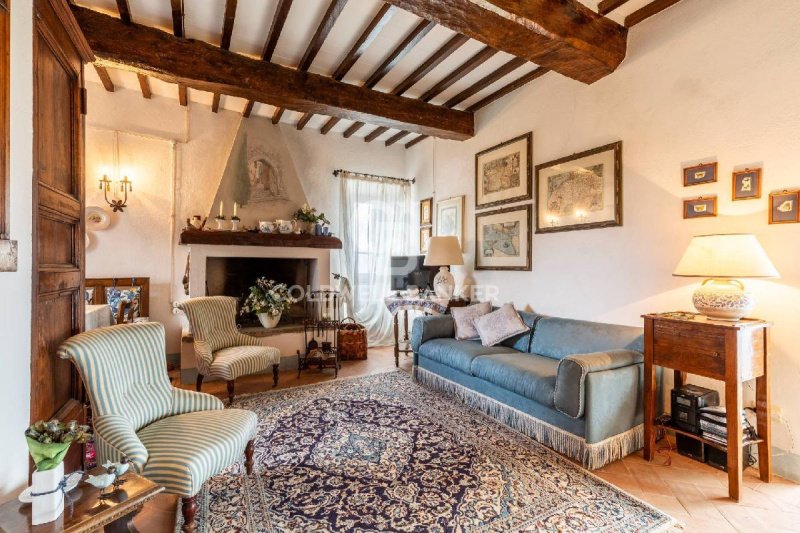
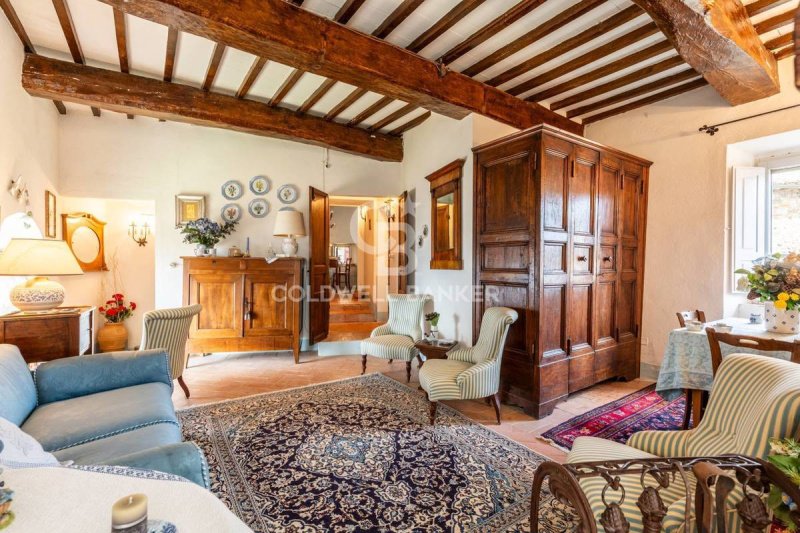
The 80 sq m apartment is located on the second floor of a historic building and comprises an entrance hall, a living room with a fireplace and kitchenette, a hallway with two bedrooms, and a bathroom.
The village also features a clubhouse with a garden, shared by all residents of the center. The purchase of the apartment also includes a share of this clubhouse, which can be used for events. Use of the clubhouse is shared with the other owners.
The apartment has been meticulously renovated to preserve its main, traditional features. The exterior walls are made of stone, while the interior features wooden beams, terracotta floors, stone fireplaces, and a bathroom with small, square stone tiles. A large archway in the living room, framed by a window, illuminates the space and offers a unique view of the surrounding countryside.
The apartment, given its location, is perfect for those seeking a quiet life in a small village where time seems to have stood still since the Middle Ages. Its close proximity to amenities makes the apartment suitable as a year-round residence or a vacation home.
HISTORY
The origins of the town are unknown, likely dating back to populations related to the Castellieri culture of northern Italy, but the first certain evidence of the village's existence dates back to the early Middle Ages. Between the 11th and 12th centuries, the village was contested between Orvieto and Marsciano, before finally being conquered by Perugia. At the time, the village was referred to as a villa (from the Latin "fortified farm") with a census of 24 families. A hundred years later, walls were built around the town (150 m, still visible today) and the villa officially became a castrum (not strictly a "castle" but a "walled city"), and the town is mentioned under this title in documents after 1380 AD.
Frequent wars in central Italy repeatedly damaged the city, and Perugia repeatedly ordered a tax exemption for the city to allow its recovery (1440, 1455, 1470, 1475). However, none of these laws were sufficient to prevent the steady depopulation of the village, which in 1656 had no more than 85 people and was completely depopulated by 1960.
Today, the village has been finely restored and restored and offers a unique opportunity for a journey into the past.
DISTANCES
Easily accessible via the municipal road and located in an extremely quiet position, the apartment is not far from essential services, available in the nearby town of Piegaro (10km; 20'), and allows you to move easily throughout Umbria and Tuscany:
Montegabbione (11km; 20')
Città della Pieve (22km; 30')
Castiglione del Lago on the shores of Lake Trasimeno (30km; 40')
Perugia (35km; 50')
Marsciano (36km; 45')
Deruta, famous for its beautiful handcrafted polychrome ceramics (42km; 50')
Montepulciano with its Nobile wine (50km; 1h 5').
The most useful airports to reach the property are:
Perugia Sant'Egidio (44km; 50')
Rome Ciampino (173km; 2h)
Florence Peretola (174km; 2h)
Grosseto Baccarini (178km; 2h 25')
Rome Fiumicino (188km)
The apartment is located in a small medieval village finely restored in the 1980s by the Fendi sisters and the famous architect Nicola De Menna.
The Borgo is located on top of a hill between Orvieto, Lake Trasimeno and Perugia with panoramic views of remarkable beauty.
The 80 sq m apartment is located on the second floor of a historic building and comprises an entrance hall, a living room with a fireplace and kitchenette, a hallway with two bedrooms, and a bathroom.
The village also features a clubhouse with a garden, shared by all residents of the center. The purchase of the apartment also includes a share of this clubhouse, which can be used for events. Use of the clubhouse is shared with the other owners.
The apartment has been meticulously renovated to preserve its main, traditional features. The exterior walls are made of stone, while the interior features wooden beams, terracotta floors, stone fireplaces, and a bathroom with small, square stone tiles. A large archway in the living room, framed by a window, illuminates the space and offers a unique view of the surrounding countryside.
The apartment, given its location, is perfect for those seeking a quiet life in a small village where time seems to have stood still since the Middle Ages. Its close proximity to amenities makes the apartment suitable as a year-round residence or a vacation home.
HISTORY
The origins of the town are unknown, likely dating back to populations related to the Castellieri culture of northern Italy, but the first certain evidence of the village's existence dates back to the early Middle Ages. Between the 11th and 12th centuries, the village was contested between Orvieto and Marsciano, before finally being conquered by Perugia. At the time, the village was referred to as a villa (from the Latin "fortified farm") with a census of 24 families. A hundred years later, walls were built around the town (150 m, still visible today) and the villa officially became a castrum (not strictly a "castle" but a "walled city"), and the town is mentioned under this title in documents after 1380 AD.
Frequent wars in central Italy repeatedly damaged the city, and Perugia repeatedly ordered a tax exemption for the city to allow its recovery (1440, 1455, 1470, 1475). However, none of these laws were sufficient to prevent the steady depopulation of the village, which in 1656 had no more than 85 people and was completely depopulated by 1960.
Today, the village has been finely restored and restored and offers a unique opportunity for a journey into the past.
DISTANCES
Easily accessible via the municipal road and located in an extremely quiet position, the apartment is not far from essential services, available in the nearby town of Piegaro (10km; 20'), and allows you to move easily throughout Umbria and Tuscany:
Montegabbione (11km; 20')
Città della Pieve (22km; 30')
Castiglione del Lago on the shores of Lake Trasimeno (30km; 40')
Perugia (35km; 50')
Marsciano (36km; 45')
Deruta, famous for its beautiful handcrafted polychrome ceramics (42km; 50')
Montepulciano with its Nobile wine (50km; 1h 5').
The most useful airports to reach the property are:
Perugia Sant'Egidio (44km; 50')
Rome Ciampino (173km; 2h)
Florence Peretola (174km; 2h)
Grosseto Baccarini (178km; 2h 25')
Rome Fiumicino (188km)
Details
- Property Type
- Apartment
- Condition
- Completely restored/Habitable
- Living area
- 80 m²
- Bedrooms
- 2
- Bathrooms
- 1
- Energy Efficiency Rating
- Reference
- CBI134-2923-252
Distance from:
Distances are calculated in a straight line
Information about Piegaro
- Elevation
- 356 m a.s.l.
- Total area
- 99.0721 km²
- Landform
- Inland hill
- Population
- 3347
Map
The property is located within the highlighted Municipality.
The advertiser has chosen not to show the exact location of this property.
Google Satellite View©
Contact Agent

FGM CONSULTING S.r.l.
Piazzale Bellucci, 1, Perugia, Perugia
+39 334 963 5109 - 075/3759488 - 3478319952 Liliana
What do you think of this advert’s quality?
Help us improve your Gate-away experience by giving a feedback about this advert.
Please, do not consider the property itself, but only the quality of how it is presented.