
In 2025, enquiries for properties in Italy from international buyers recorded an overall decline of 5.89% compared with 2024. However, the aggregate figure in the 2025 report conceals a much more complex picture, one that points to the transformation of a market that is still growing steadily over the longer term. Looking at the past five years, enquiries have increased by 65.19%.
Our annual analysis shows that the decline is strongly influenced by the slowdown in two historically dominant markets — the United States and Germany — while new geographical areas are gaining strength. Interest in villages and secondary locations is increasing, and the priorities of international buyers are changing.
During 2025, the segment of foreign buyers interested in purchasing a home in Italy remains active, but appears more selective and rational. There is growing attention to more contained budgets, with choices increasingly driven by quality of life and by the opportunities offered by less overheated areas. At the same time, emerging countries are gaining ground, while long-term trends linked to lifestyle, sustainability, authenticity and a return to local areas continue to consolidate.
The Weight of the United States Reshapes the Overall Picture
The United States remains the leading country of origin for international buyers, accounting for 25% of total enquiries. However, in 2025 it recorded a significant decline of 21.6%, a decrease that directly affects the overall trend.
A similar, though less marked, contraction was also seen in Germany, down 13.6%. Germany has long been another key pillar of the international property market in Italy. The slowdown in these two markets is likely linked to macroeconomic factors.
New Countries Are Growing, Bringing More European and Diversified Demand
In 2025, alternative markets are growing and gradually rebalancing demand. The United Kingdom has strengthened its position as the second most important market for Italy, with growth of 23.23%. It is followed by France, up 4.73%, and by a strong increase in enquiries sent by foreigners while they are in Italy, up 18.58%. This is a clear sign of tourism increasingly turning into a concrete property-purchase project.
Particularly interesting is the expansion of emerging or previously marginal markets. Spain, Greece, the Czech Republic, Romania, Brazil, Argentina, India and Mexico all show very strong growth compared with 2024.
This demand is more fragmented but dynamic. It is often linked to more moderate budgets and to interest in areas that are less inflated than traditional markets. The gradual increase in enquiries from the United Arab Emirates is also worth noting; in this case, interest is mainly focused on luxury properties.
Less Focus on “Classic” Regions, More Search for Alternatives
From a geographical point of view, 2025 marks an important rebalancing among Italian regions. Tuscany remains the most sought-after region, accounting for 14.77% of total enquiries, although it recorded an annual decline. It is followed by Sicily and Lombardy.
At the same time, several regions are growing strongly:
- Trentino-Alto Adige: +44.29%
- Friuli-Venezia Giulia: +27.52%
- Piedmont: +11.27%
- Basilicata: +10.25%
- Veneto: +5.8%
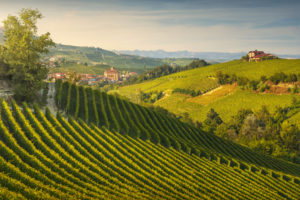
Trentino-Alto Adige is being driven by quality of life, its Alpine setting and long-term prospects. Friuli-Venezia Giulia is increasingly perceived as a more accessible alternative in north-eastern Italy. Piedmont is benefiting from the appeal of the Langhe, Monferrato and the lakes. Basilicata and Veneto are attracting demand oriented towards authentic, less crowded areas.
Provinces and Towns: “Secondary” Italy Takes Centre Stage
Analysis at local level confirms what has now become a structural trend: growth is not concentrated in the major iconic cities, but in provinces and medium-sized or small towns, often far from the mass-tourism circuit.
The Report on Provinces and Municipalities
The provinces recording the strongest growth — Vercelli (+85% year on year), Novara (+61.74%), Biella (+63.08%), Fermo (+52.01%), Viterbo (+48.43%), Naples (+55.36%) and Bergamo (+44.34%) — tell the story of a more widespread Italy, capable of attracting buyers looking for quality of life, natural surroundings and more accessible prices.
The same applies to municipalities. Alongside established names such as Ostuni, in the province of Brindisi — which, for the second year in a row, is the most requested municipality in Italy — Scalea, in the province of Cosenza, and Noto, in the province of Syracuse, new locations are emerging. These include Caltagirone, Santa Maria del Cedro, Nizza Monferrato, Longobardi, Chiusa Sclafani, Semproniano, Urbe, Petacciato and several towns around the lakes of Lombardy and Piedmont.
This is demand that favours strong local identity, authenticity and potential for capital appreciation, rather than simply the fame of a destination.
Among Italy’s major cities, Rome ranks first for interest. In 2025, driven by the Jubilee, it recorded growth of 44.69% compared with the previous year. Further down the ranking are Florence, Genoa and Milan. Among the major Italian cities showing positive growth compared with 2024 are Naples, Bologna, Turin (+43.64% year on year) and Bari (+35.71% year on year).
Prices and Budgets: A More Cautious and Rational Market
The average value of the property requested stands at €428,622, showing slight growth of 1.27%. However, the distribution of price ranges points to a more cautious market. Enquiries for properties below €100,000 are increasing, while all higher price brackets are declining, particularly those between €250,000 and €1 million.
This signals a less speculative and more selective international demand, oriented towards carefully considered purchases often linked to lifestyle projects, second homes or gradual relocations.